THE HOTEL
WHY CERTAIN SPACES MAKE US FEEL AT HOME
Spaces that are easy to inhabit are those designed for actual human bodies, not for wide-angle photographs.
There are hotels that see themselves as stages. You notice it in the theatrical lighting, in the carefully curated furniture, in that cinematic atmosphere where everything is correct and nothing quite feels like it belongs to you. You arrive, drop your suitcase, and leave. They are places you pass through, spaces you never really connect with.
And then there are the others. The ones where, the moment you step inside, you feel you’ve arrived somewhere specific. The difference between the two isn’t budget or category. Its intention.
The scale of what can be lived in
Scale is the first thing, although it’s almost never the first thing you notice. Spaces that are easy to inhabit are those designed for actual human bodies, not for wide-angle photographs. A room can be both small and generous at once. It depends on whether its proportions respond to how someone moves through it, how they sit, to that moment when a person pauses for no clear reason and looks out the window.


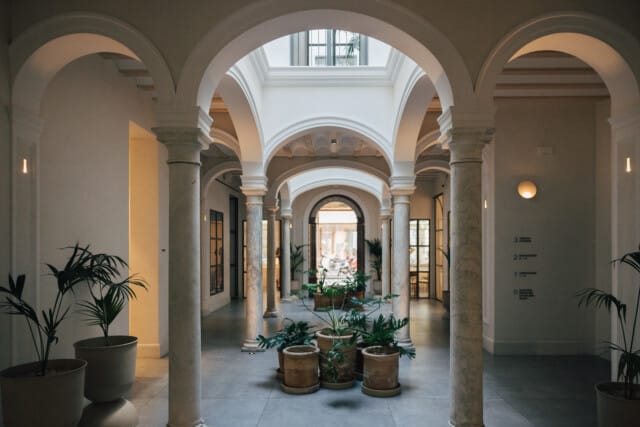
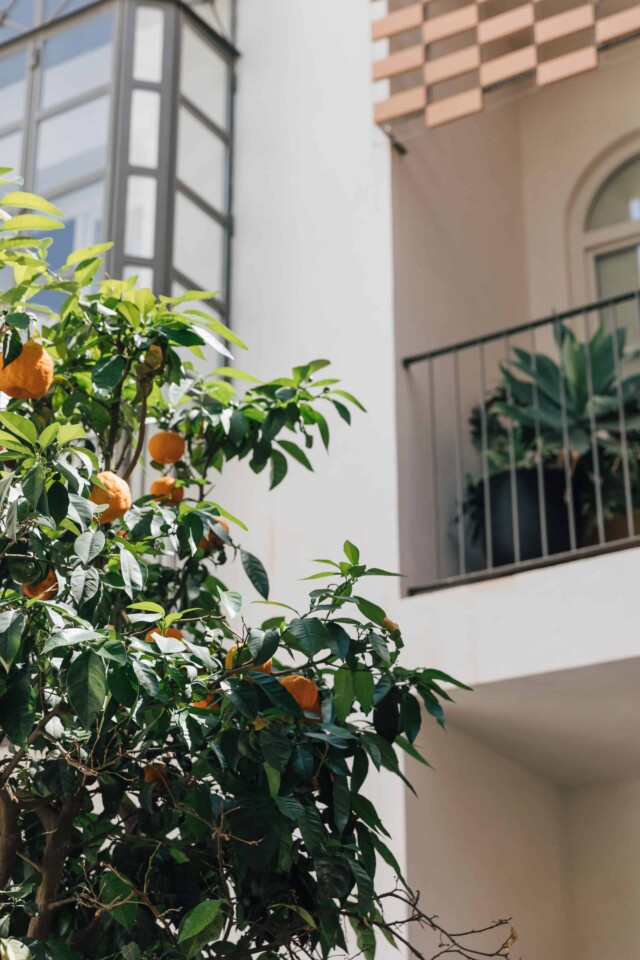
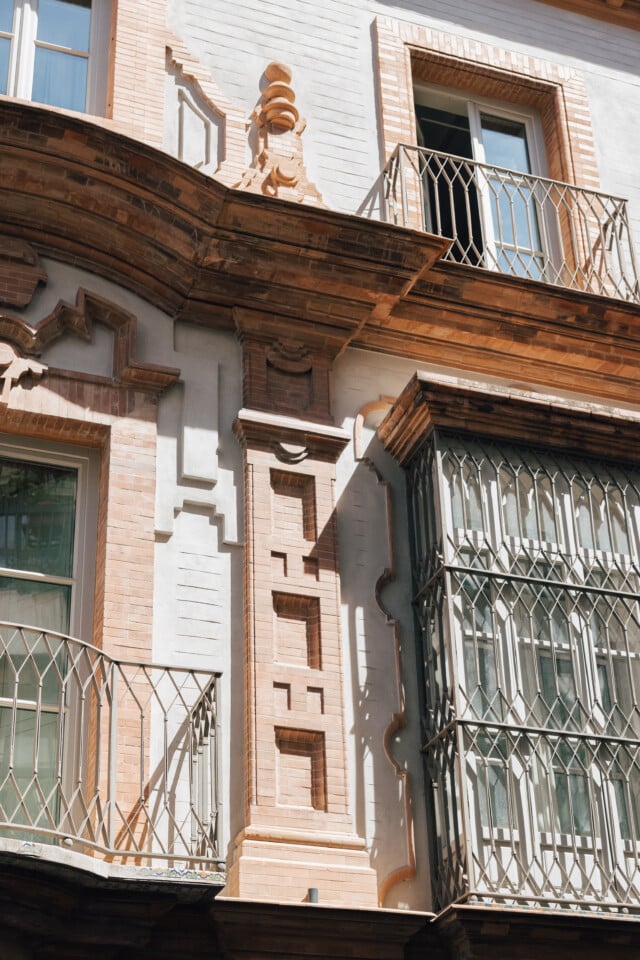
The building that houses Plácido y Grata is a 19th-century civil palace. Its high ceilings are not decorative whims; they are the result of a climate that required air to move. Its corridors are wider than what we might consider necessary today, but at the time, that was simply functional. That logic, building to be lived in rather than admired from the outside, is what allows the space to function today as a place of hospitality.

“Building to be lived in rather than admired from the outside, is what allows the space to function today as a place of hospitality.”

What materials do
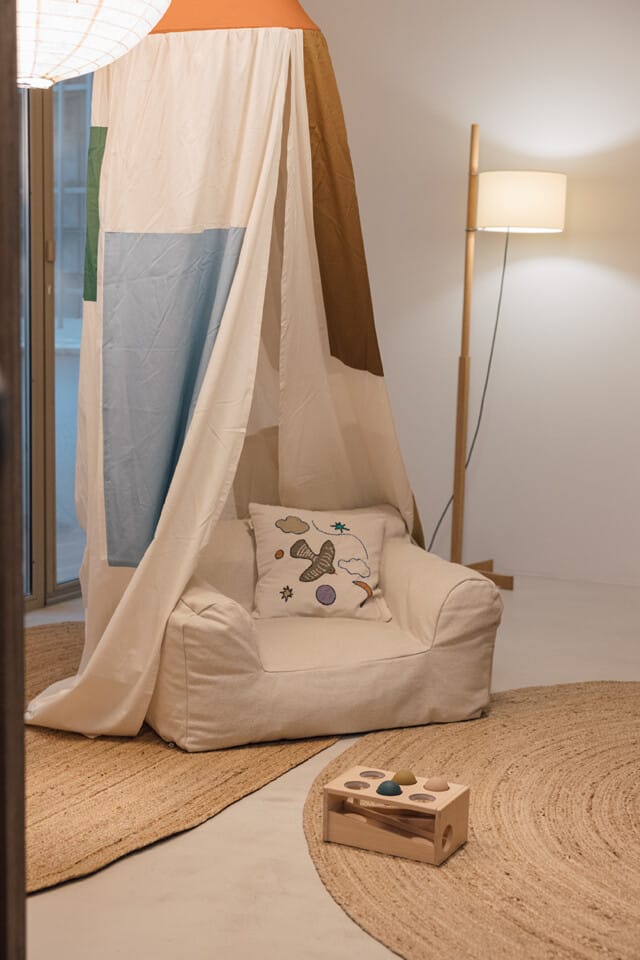
There’s a reason the hotels we remember fondly tend to have wood, or stone, or textiles with a bit of weight to them. It’s not nostalgia, and it’s not aesthetics. It’s physics. Natural materials respond differently to touch. They behave differently at different times of day. They age in visible ways, which means they carry history: someone was there before you and left a trace, however subtle.
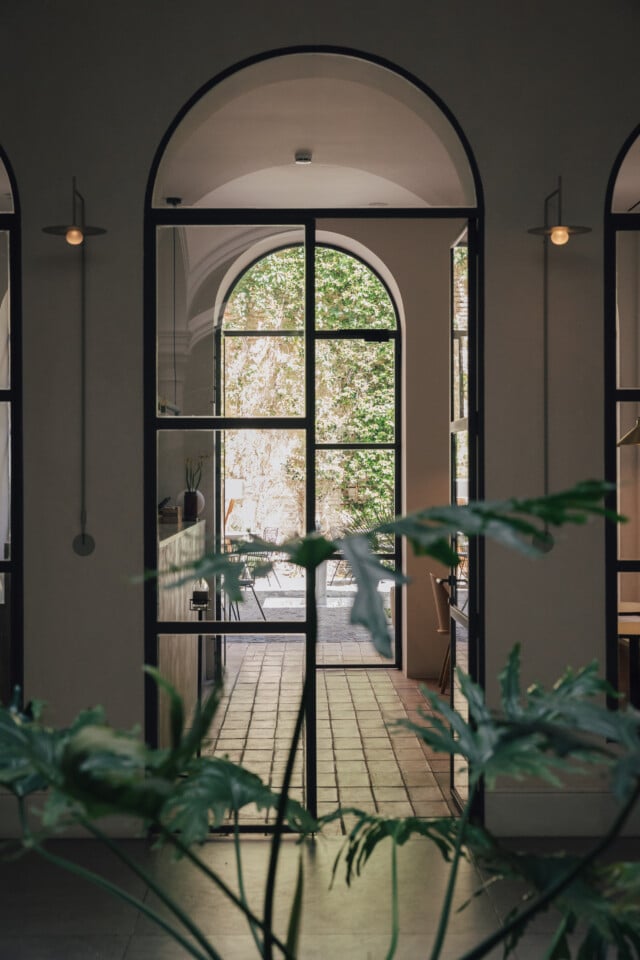
At Plácido y Grata, this choice of materials isn’t decorative; it’s structural. It follows the same logic that makes the patio, with its columns, arches, and plants that require daily care, the heart of the hotel rather than a postcard image. A living patio is a breathing space. And spaces that breathe are the ones that make you want to stay.

The thresold and what happens when you cross it
Architects know that the threshold, that moment between outside and inside, is one of the most important decisions in any building. It’s the instant when the body changes state. If it’s well-designed, there’s a kind of physical decompression that almost happens. Shoulders drop. Breathing slows, even if you hadn’t realized it needed to.
In southern cities, that threshold plays an added role: separating the outside, which in summer is noisy and overwhelmingly bright, from the interior, which offers shade and a certain quiet. The entrance hall of a Sevillian palace is a transitional chamber, a space that exists precisely so that what you don’t need inside can be left behind.
That ancient mechanism, older than Andalusian architecture itself, still works. Crossing the door of Plácido y Grata from the streets of Seville’s center creates a pause. The noise stays outside, and what begins is something closer to physical ease and mental quiet.
The diference between decorating and inhabiting
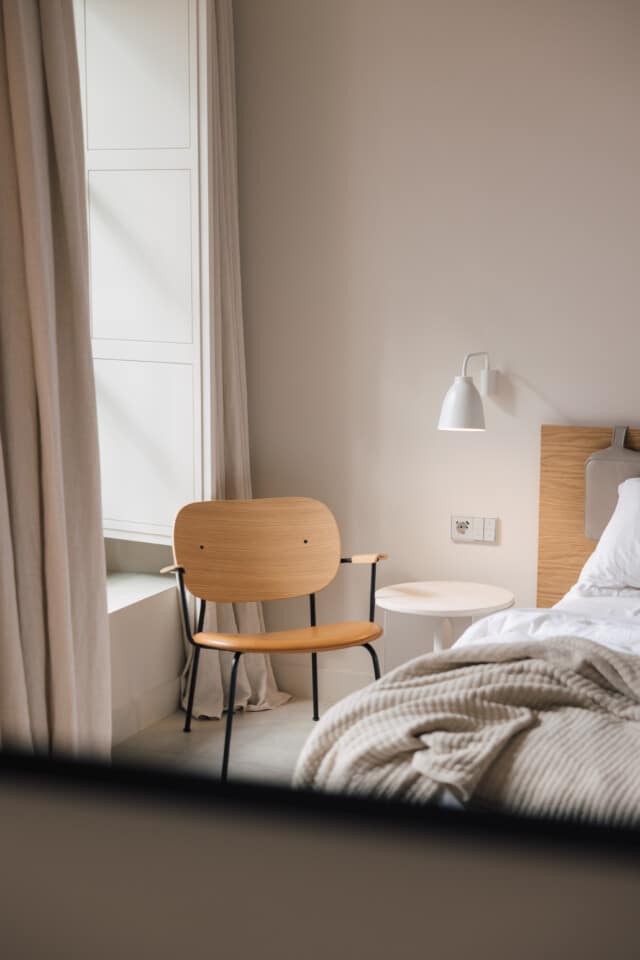
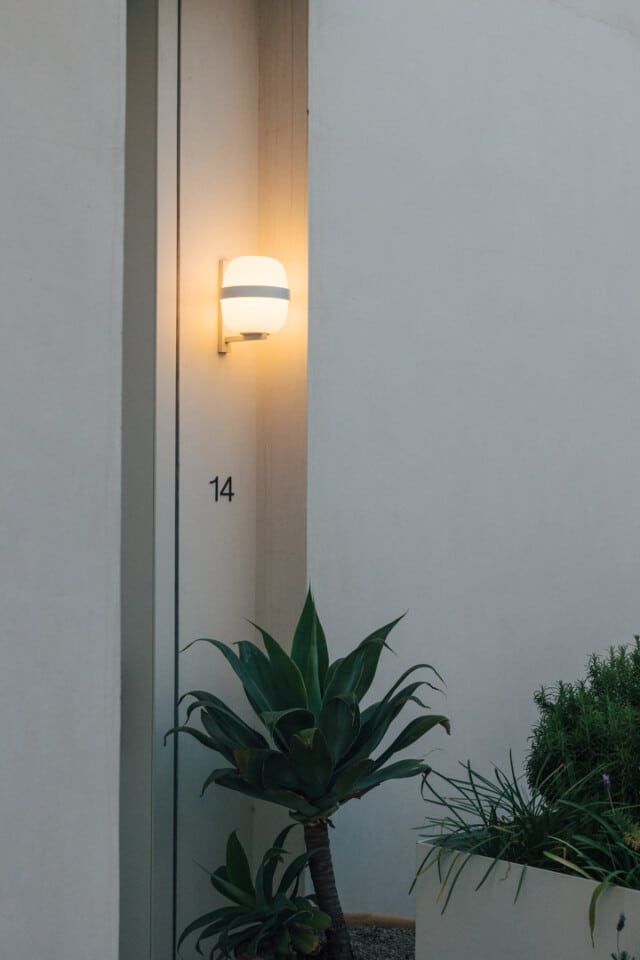
A decorated space and an inhabited one are distinguished by how things are used. Not by the design objects, which may exist in both, but by whether those objects serve a real purpose or a symbolic one. A lamp that provides light where it’s needed, not where it looks good in a photograph. A chair placed where someone might actually want to sit, not where it completes a composition.
This distinction is what separates a beautiful hotel from a good one. The beautiful is admired. The good is lived in.
The philosophy of Plácido y Grata has always leaned toward the latter. Design here is the visible consequence of a way of thinking about hospitality. Every element, from the materials in the rooms to the tableware in the café, responds to the same question: what does someone who has just arrived in this city actually need in order to feel well?

Why does any of this matter
True hospitality can’t be faked. It can be simulated, and many places do so quite efficiently, but it shows. Not always consciously; sometimes it’s just a slight discomfort you can’t quite name.
The opposite shows, too. That sense that someone thought about this space from the inside out, that decisions were made by people who genuinely asked themselves how they wanted someone to feel upon arriving.
At its core, the architecture and design that make us feel at home remind us of something that more ambitious buildings often forget: a home is not an object to be looked at. It’s a place to live in.
Plácido y Grata occupies a building that has been inhabited for more than a century. That history doesn’t disappear; it settles into the walls, into the proportions of the rooms, into the way light moves throughout the day. Perhaps that’s why some guests, when they leave, say they felt at home.